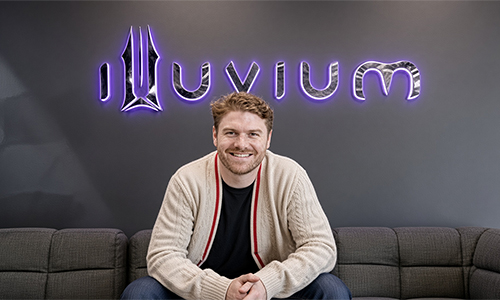
Kieran Warwick, co-founder of Illuvium, shared a bold prediction about the future of crypto games. In a long post on X, he wrote: “I can’t believe I’m saying this, but play-to-earn games are coming back”. The statement stands out because of who made it. In the last cycle, Warwick openly called himself one of the biggest opponents of the P2E model. He characterized the model as unsustainable and similar to a Ponzi scheme, which, by his own admission, is what got him into trouble.
He says his concerns about the economics have not changed. What has changed, in his view, is the cost of building these games. He believes this shift opens up something “that many people won’t like.”
Warwick begins his argument with the dawn of DeFi. Back then, projects used tokens as incentives to attract liquidity, which in his view remains a useful idea to this day. But he notes that a product’s intended purpose and its actual market fit can differ greatly.
He recalls how builders learned to push emissions to extreme levels, knowing that high yields might last only days, hours, or even minutes. Users rushed in anyway, sharing screenshots of APY and competing to find the newest farm. According to Warwick, it wasn’t just about the money. It became a competition: who gets in first, and who times their exit best.
The point is that crypto already had its own game. The next step, he says, is to build a real game on top of it.
Five years ago, building even the simplest playable P2E game required serious amounts of time and money. Warwick explains that spending a year developing a game whose profitable hype might last only a week made little sense, even if that week could attract hundreds of thousands of players.
That is why teams tried to optimize their economies, carefully plan emissions, and create sustainable demand for their tokens. Warwick cites Axie Infinity as the best-known example. Over time, the issuance of SLP exceeded the volume of tokens burned, and the team cut rewards to restore balance to the economy.
Artificial intelligence tools are changing this picture. Warwick asks what happens when someone can build a simple game in a week. Such a developer hasn’t spent years building intellectual property and doesn’t feel a strong emotional attachment to it. A short lifespan becomes acceptable if the launch attracts enough attention, users, and money.
“Suddenly, a game that lasts only seven days becomes viable,” he wrote. “I think that’s what changes everything”.
He describes the formula he expects to see: extremely high emissions, yield wrapped in a game, and easy access from mobile devices or a browser. The yield will still decline, and players will still leave, but by then the developer may already be halfway through finishing the next game.
Warwick acknowledges that his point of view may be unpleasant for longtime Illuvium supporters, as the project has been developed for years despite the economic downturn. Nevertheless, he wrote:
“But I actually think this will be GOOD for Illuvium”.
He notes that just two months ago, many were calling the entire category of crypto games dead. If several new P2E games become popular and players start earning, he expects the gaming industry to quickly return to normal. In this scenario, in his view, existing gaming tokens could benefit, as capital flows back into the sector.
He also notes a spillover effect. Some players who come from fast-paced, high-yield games may discover deeper projects such as Illuvium.
“We still need to redirect that attention to those who stay,” he added.
A Clear Risk Warning
Warwick does not consider this a safe opportunity.
“Again, I’m not saying everyone who participates will make money. Many will lose,” he wrote.
He compares this trend to sports betting and prediction markets, noting:
“If you don’t like gambling, you probably won’t like what I’m describing”.
In his view, crypto is permissionless, and if enough money is at stake, someone will build these games whether others approve of them or not.
What Is Illuvium?
Illuvium is a collection of interconnected Web3 games built around Illuvials, collectible creatures that players capture, level up, and use in battle. The games include Illuvium: Arena, a competitive autobattler, and Overworld, an MMO with an open world where players explore the landscape and collect Illuvials.
The studio has faced a difficult market situation. In August 2026, Warwick said the team had agreed to cut salaries again in order to extend the project’s runway by more than 12 months. At the time, the protocol was generating less than $10000 per month, and the remaining team was almost entirely focused on the MMO game Overworld.
Development and community work continue. Illuvium: Arena v1.18.8 launched on October 7 along with the “Abyss” event pass, which ends on October 27. The game is also running Illuvium Challengers Series #2, with the final taking place on October 25. As for governance, applications for five seats on the Illuvium Main Council are open until October 27, with voting running from October 27 to 31. Warwick himself was elected to the council in the previous Epoch 11 election.
Warwick ended his post with a clear prediction for the coming months:
“I think things are going to get crazy again. And much faster than people expect”.
Read also: