In This Article
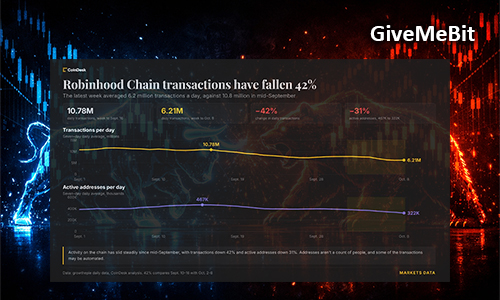
Since mid-September, Robinhood Chain has recorded a 42% decline in the average number of daily transactions, with trading activity and network fees dropping sharply.
According to a CoinDesk report dated October 10, the layer-2 network processed an average of 6.2 million transactions per day between October 2 and 8, compared to 10.8 million between September 10 and 16. Calculations based on growthepie data showed that the number of active addresses fell by 31%, while weekly spot trading volume dropped 21% to $7.45 billion.
Robinhood continues to cover network fees for eligible currency swap operations in wallets, extending the promotion until December 31, as the network approaches the end of its third full month of operation.
Robinhood Chain Transaction Count Declines Due to Reduced Wallet Activity
The latest data shows that the slowdown has spread not only to fee collections but also to the number of transfers and trades executed on the Robinhood Chain platform.
According to growthepie data cited in the October 10 report, the daily transaction count fell from an average of 10.8 million in mid-September to 6.2 million in the first full week of October.
Compared to the previous week, activity declined by another 20%, continuing the slide that followed an unusually busy period of network operation in late August and early September.
The number of active addresses on the blockchain followed a similar trend, averaging approximately 322,000 per day between October 2 and 8.
The 31% decline from mid-September indicates that fewer addresses were interacting with the network, although this does not confirm a similar reduction in the number of individual users. One trader can control multiple cryptocurrency addresses, while automated trading systems can execute numerous transactions without direct human involvement.
The slowdown in growth followed a strong first quarter for Robinhood Chain, which launched its public mainnet on July 1, 2026.
In its quarterly report dated October 9, growthepie confirmed that between July and September the network processed approximately 793.7 million transactions.
The analytics firm recorded $51 million in network fees paid by users during the quarter and approximately $591.4 million in application revenue.
On August 4, less than six weeks after the public launch, Robinhood Chain surpassed the 10 million transactions-per-day mark for the first time.
The surge in transactions on the Robinhood Chain network drew attention as early as July, when activity reached 7.6 million daily transactions and approached the levels recorded by Coinbase’s Base network.
Trading Volume on the Robinhood Network Declines While TVL Remains Above $1 Billion
The decline in transaction count coincided with a slump in trading activity on decentralized exchanges operating on the Robinhood Chain platform.
According to DefiLlama data cited by CoinDesk, trading volume on decentralized spot exchanges between October 2 and 8 amounted to approximately $7.45 billion. This is 21% less than the previous week, when the figure stood at $9.46 billion.
Uniswap remained the network’s largest decentralized exchange, accounting for approximately 77% of spot trading activity during that period.
Despite the drop in transaction count, users continued to hold assets in applications offering trading, borrowing and lending services.
DefiLlama data showed that the total value of funds locked in Robinhood Chain applications increased by roughly 2% during the reporting week to $1.04 billion. The stablecoin volume on the network reached approximately $1.10 billion.
According to the latest DefiLlama data, deposits in decentralized finance amount to around $1.05 billion, while the stablecoin supply stands at around $1.07 billion. These figures change as funds move between applications and token prices fluctuate.
The data showed a different trend in perpetual futures trading, where activity rose despite the decline in spot trades. According to CoinDesk, perpetual futures trading volume over the last seven days reached approximately $7.35 billion as of October 9, an increase of 26%.
Perpetual futures allow traders to speculate on cryptocurrency prices without directly owning the underlying assets. Robinhood provided access to perpetual futures through the Lighter platform when the blockchain launched in July.
In its mainnet launch announcement, the brokerage confirmed that eligible users would be able to access decentralized derivatives, as well as tokenized stocks and lending applications.
Network Fees Fell Sharply From September Peaks
Alongside the decline in trading volume, Robinhood Chain has faced a sharp contraction in fees charged for blockchain transactions.
By CoinDesk’s estimates, between October 2 and 8 users paid around $65,000 per day in network fees, 39% less than the previous week.
That figure was significantly lower than the roughly $8 million collected on the network’s busiest day in early September.
growthepie data showed that the sharp rise in fee collections in late August and early September was concentrated within a relatively short period.
Between August 30 and September 10, median transaction costs increased 31-fold compared to the previous average.
According to growthepie’s October 9 review, that 12-day period accounted for approximately 74% of all network fees collected during the third quarter.
A Bernstein research note cited by CoinDesk estimated that Robinhood retains roughly 90% of the network’s net protocol fee revenue under existing infrastructure agreements.
The revenue-sharing structure has drawn attention, as Robinhood Chain uses Arbitrum technology.
Earlier research into Robinhood Chain’s revenue-sharing model explained that the Arbitrum expansion program requires participating blockchains to direct a portion of qualifying protocol revenue into the Arbitrum ecosystem.
Under the program, 8% of qualifying net protocol revenue goes to the Arbitrum DAO treasury, and 2% to the Arbitrum Developer Guild.
Robinhood Chain’s early revenue growth came during intense trading activity involving recently launched tokens.
Previous analysis of memecoin activity on the Robinhood Chain network showed that, despite its stated focus on tokenized financial assets, speculative trading dominated the network’s early usage.
October data shows that both the transaction count and network fees have declined from the previous surge in activity. However, the available data does not establish what portion of the latest decline came from memecoin trading.
See also: