According to Glassnode, the actual growth of bitcoin's market capitalization over the 30 days leading up to 5 October came mainly from existing holders rather than new capital. The analysis warns that the rise in the price of BTC does not yet reflect a sufficient inflow of new capital into the market.
The inflow of "new money" into bitcoin, including purchases by corporate treasuries, "stablecoin growth" and inflows into U.S. spot-market Bitcoin-ETF funds, amounted to about $4.9 billion over the 30 days leading up to 5 October.
Bitcoin's realized capitalization, which values each coin at the price at which it last changed hands on the blockchain, grew by $12.8 billion, more than double the figure for the same period.
"Thus, new money accounts for less than two-fifths of this growth. The rest is coins changing hands at higher prices among money already on the market," Glassnode commented.
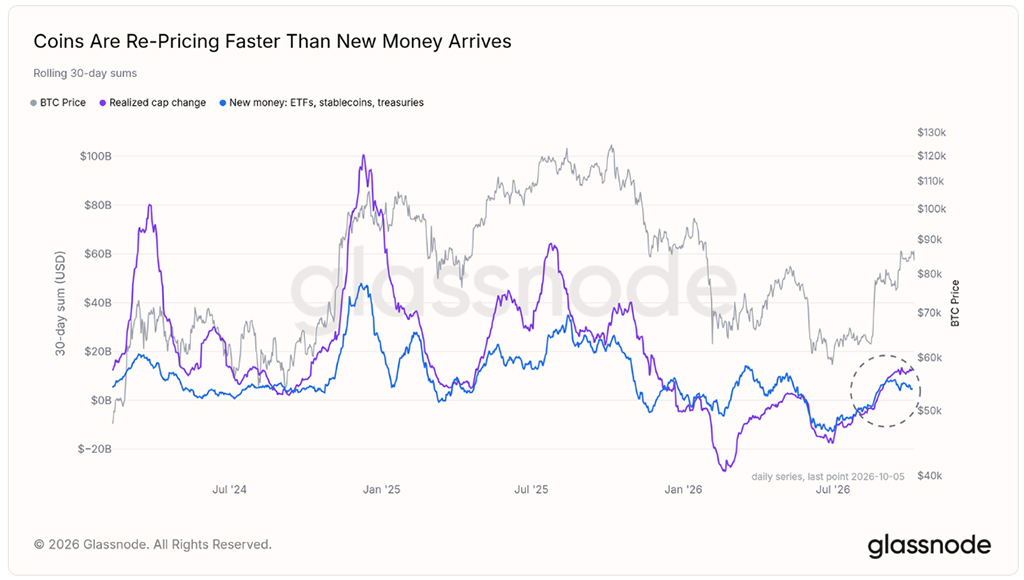
Related data shows that the recent rallies of the BTC/USD pair have displayed the same divergence since the launch of the ETF in January 2024. However, the situation is currently different: inflows remain small compared with the short-term increase in realized capitalization.
"The price rallies of 2024 and 2025 showed a similar pattern, but with a much greater inflow of capital," Glassnode added. "Until inflows increase, further moves depend on how high the payments from existing holders will be".
Profit-taking by new investors reached the $85000 mark
Since 21 September, bitcoin has made four attempts to break through the $87000 mark. Each of these attempts failed, as buyers ran into a growing surplus of liquidity in exchange order books. As of Thursday, when this article was written, the BTC/USD pair had approached the $83000 mark, down 1% since the beginning of the month.
In addition, Glassnode noted increased profit-taking among buyers over the weekend, when bitcoin closed above 85 000 for the week for the first time since January.
"Of all the coins sent to exchanges that day, about 86% came from short-term holders, that is, those who had owned the coins for less than 155 days and were selling them at a profit. This is the highest share for any day in the past year; on a typical day it is less than two-fifths," it continued.
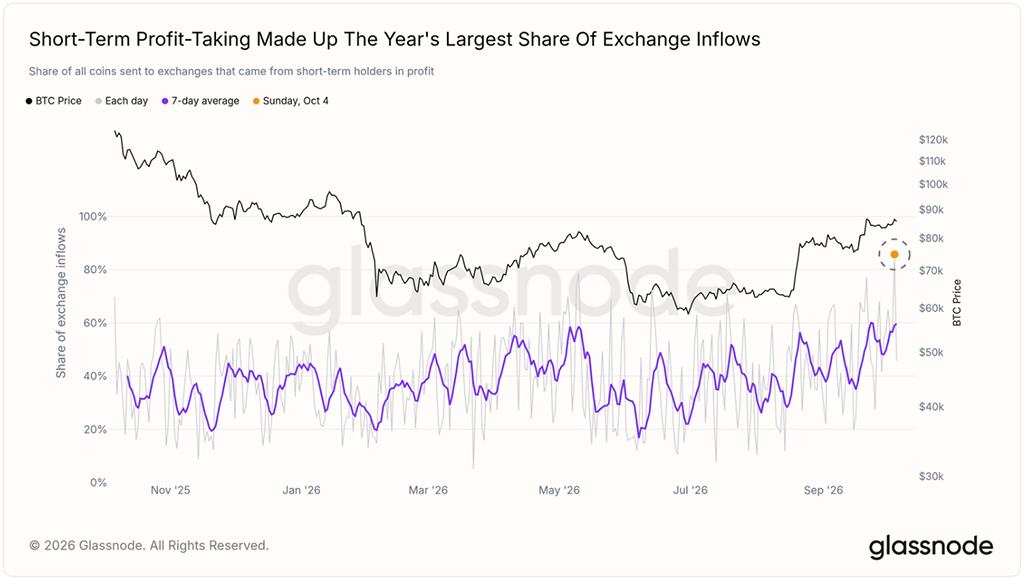
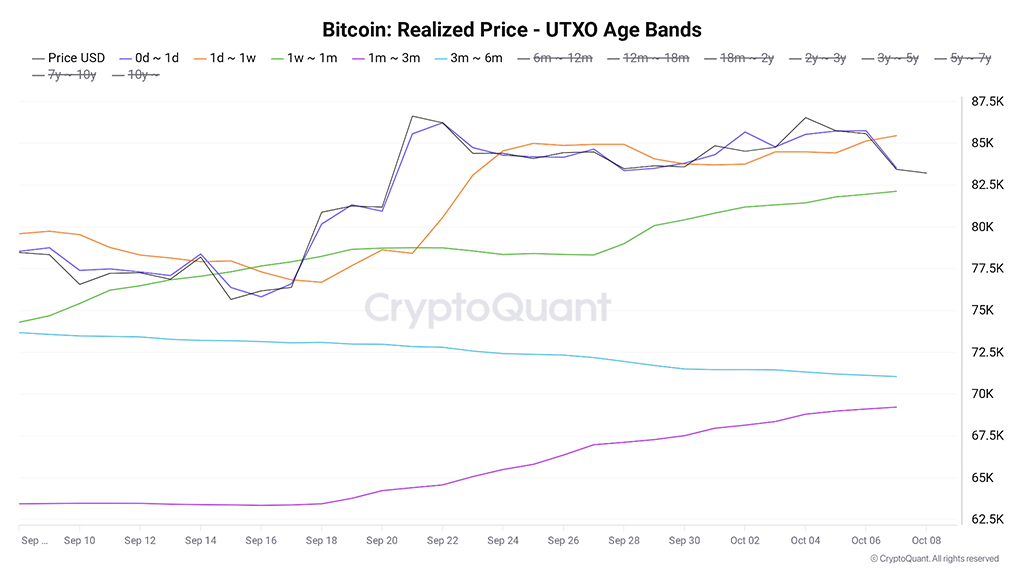
Short-term holders are traditionally considered more sensitive to price volatility. This group of investors is still netting a profit, and its aggregate cost basis, also known as the realized price, as of 7 October still stands at around $78250, according to CryptoQuant.
Read also: