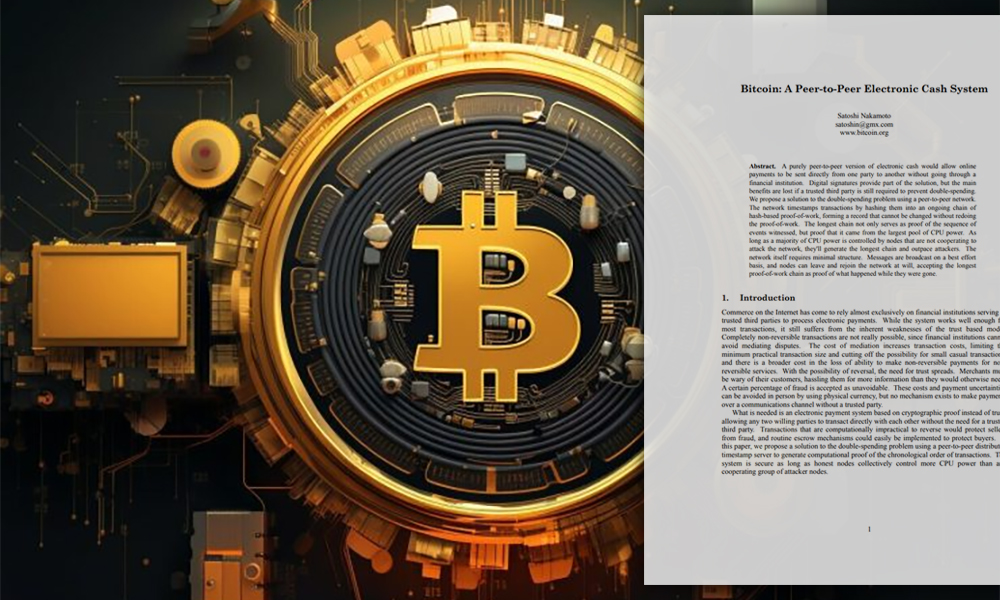
On October 31, the Bitcoin Whitepaper turned 18, once again drawing attention to Satoshi Nakamoto‘s proposal for payments without trusted intermediaries.
Satoshi Nakamoto’s original message, preserved in the mailing list archive, described an electronic payment system that would allow people to make transactions directly, without the involvement of a trusted third party. The message, published at 2:10 p.m. Eastern Time on October 31, 2008, contained a link to a paper titled:
“Bitcoin: A Peer-to-Peer Electronic Cash System“.
Eighteen years later, anniversary posts returned to that original promise, as the industry grapples with yet another major exchange hack.
The Whitepaper Proposed a Shared History of Payments
Over nine pages, the paper examined the practical problem of digital money. The recipient needed a way to verify that the sender had not already spent the same funds elsewhere, without having to turn to a centralized company to verify each payment.
Satoshi proposed publicly broadcasting transactions and using proof of work to establish their order. Participants would accept valid transactions and extend the chain with the greatest accumulated amount of work. Altering an older transaction would require redoing the work securing it and a catch-up amount of honest network work.
The proposal included a reward for participants securing the system, with newly issued coins and transaction fees used as incentives. The security model rested on honest participants collectively controlling more computing power than cooperating attackers.
Within publicly available information, there were limitations regarding privacy. In the section addressing privacy questions, the paper suggested keeping public keys separate from real-world data and using new key pairs. It acknowledged that links between transactions could reveal other payments belonging to the same owner.