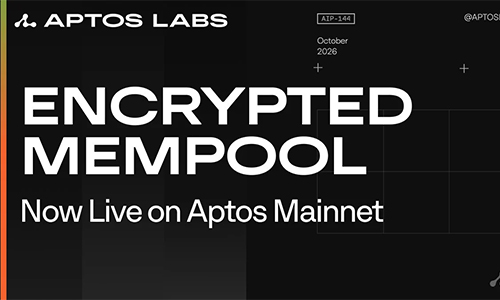
Aptos is launching the Encrypted Mempool feature on its mainnet, allowing users to hide the details of pending transactions until validators complete processing.
Aptos confirmed the launch on October 12, stating that this additional feature is designed to protect traders from front-running, sandwich attacks, and other forms of maximal extractable value (MEV). The system encrypts the contents of transactions before they enter the network, preventing validators and third-party observers from viewing the instructions while the transactions are pending. Once a block is completed, validators jointly decrypt its contents and execute the transactions.
Aptos Encrypted Mempool hides pending trades from bots
With the new feature, users can encrypt transaction instructions before submitting them to the Aptos blockchain. Details such as the assets involved in a transaction, transaction amounts, and smart contract functions remain hidden, while validators determine the order of transaction execution. The sender’s wallet address and network fee remain visible throughout the process.
Aptos explained that trading bots often monitor pending transactions on the blockchain to identify profitable opportunities before they are executed. Some attempt to place trades ahead of large orders, while others execute transactions before and after a user’s trade to profit from the subsequent price movement.
In its statement, Aptos warned that “bots use this information to trade against you or copy your strategy.” The network said the Encrypted Mempool was designed for institutional traders processing large transactions, individual users seeking protection from MEV attacks, automated trading agents, and blockchain application developers.
The project describes the feature as a protocol-native implementation that uses the existing Aptos validator network both to order transactions and to decrypt them. Unlike systems relying on external committees or private transaction builders, the new mechanism operates through validators already responsible for the blockchain’s security.
Earlier, in May 2026, Aptos outlined its plans to protect transactions from front-running, describing the proposed technology and its intended use in institutional trading. The October launch confirms that the feature has moved from the development stage to the mainnet.
Read also: