
Company Utexo is preparing to bring USDT back to the Bitcoin network after a three-year hiatus. The Dubai blockchain startup says it will carry out the integration using the RGB protocol, which allows data about asset transactions to be stored off-chain.
The public launch is scheduled for November 28, with Lightning Network support planned for the first quarter of 2027, which will provide private transfers and fast payments through the Bitcoin payment network.
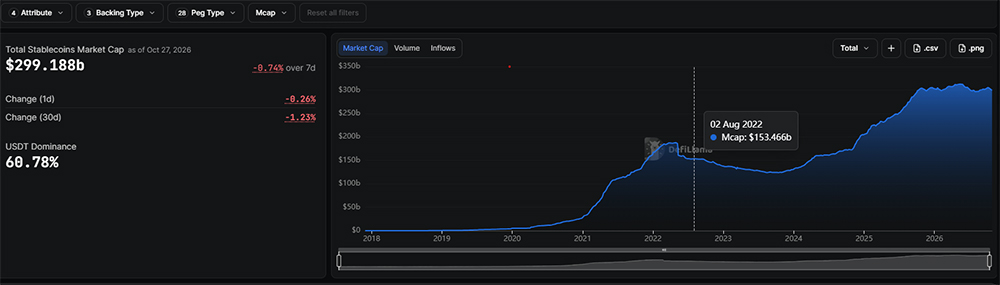
But with $300 billion worth of stablecoins already circulating on the Ethereum and Tron networks, why would users transact on a slower network that does not offer smart contracts or DeFi? Can it compete with the existing players in the stablecoin market?
This is not the first time USDT has appeared on Bitcoin. Originally, it was a stablecoin on Bitcoin in 2014, built on the Omni protocol, but in August 2023 Tether discontinued its issuance, citing declining usage.
Then Tether announced plans to launch USDT on RGB in August 2025. However, that did not happen, after which in March Tether led a $7.5 million seed round for Utexo, and the new company will launch the Bitcoin version of the stablecoin using Tether’s USDT0 protocol.
But if USDT usage on Bitcoin declined to the point where it stopped being worthwhile in the first place, why has it now become more popular? What has changed since 2023?
Viktor Ignatyuk, co-founder and CEO of Utexo, told the magazine that the answer has two parts: speed and privacy. Using Bitcoin as the settlement layer and RGB to hide transaction details from the public blockchain makes private and fast transactions a reality.
“In fact, you can achieve any speed you want,” he says. “Bitcoin is the best blockchain technology. Lightning is the best technology for scaling payments.”
Utexo emerged from an attempt to implement USDT payments on Bitcoin, and according to Ignatyuk, the idea took shape after a conversation with Tether representatives at the Bitcoin Prague conference in 2023.
The company also uses the RGB and Lightning infrastructure developed by ThunderStack, a company founded by Renat Skitsan, also a co-founder of Utexo.
What is RGB and how does it work?
RGB has been in development since 2016, and its goal is to allow users to issue and transfer digital assets through contracts pegged to Bitcoin, without recording the details of every transaction on the public blockchain.
Rather than forcing Bitcoin to behave like Ethereum, in RGB the parties themselves validate asset transactions, and cryptographic commitments pegged to Bitcoin help keep the system secure. This means RGB is a protocol originally designed for Bitcoin, not a sidechain or a rollup.
RGB also works with the Lightning Network, allowing USDT to pass through its payment channels without needing to conduct every transaction on the base layer.
“Lightning enables transactions with dynamics in 100 milliseconds,” says Ignatyuk. “That’s faster than Solana, faster than Monad, faster than Sui or Aptos. The limitation exists only in the minds of people who don’t understand how to scale Bitcoin.”
Bitcoin’s transparency hinders its business adoption, as many companies prefer to keep information about purchases and transactions between counterparties private.
Ignatyuk says that rather than competing with networks like Tron in retail transaction volume or Ethereum in decentralized finance, the company believes the combination of secure Bitcoin-based settlement and greater transaction privacy will be enough to convince businesses to switch to this platform.
Ignatyuk also notes that Utexo can selectively disclose relevant transaction information for regulatory compliance purposes, and the company has procedures for responding to law enforcement requests.