On Thursday, Bitcoin (BTC) held above the $83000 mark after its gains were offset by U.S. inflation data that came in below expectations.
Coinbase data showed the BTC/USD rate was unchanged over the day after brief volatility ahead of the close of monthly and September third-quarter reporting.
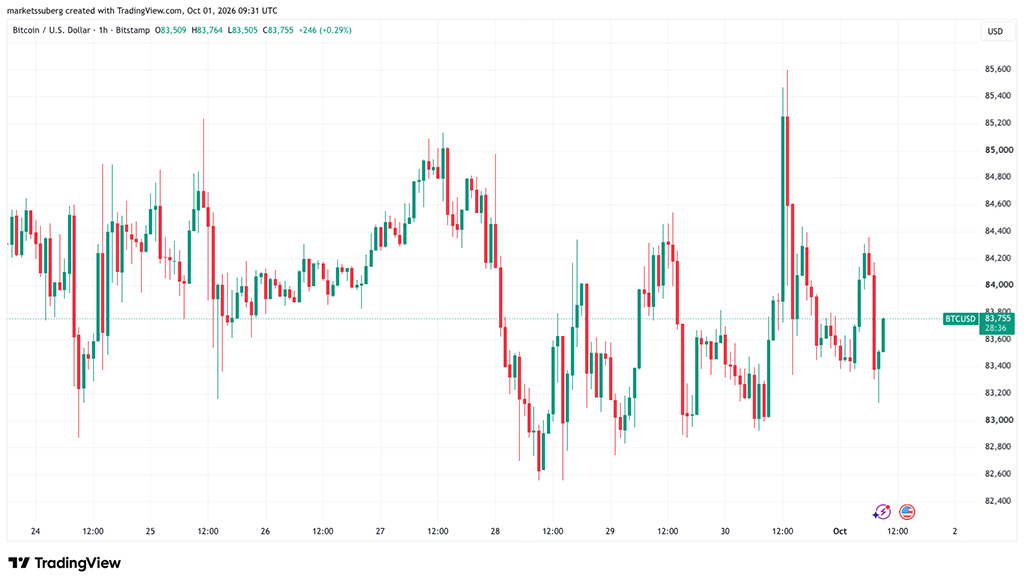
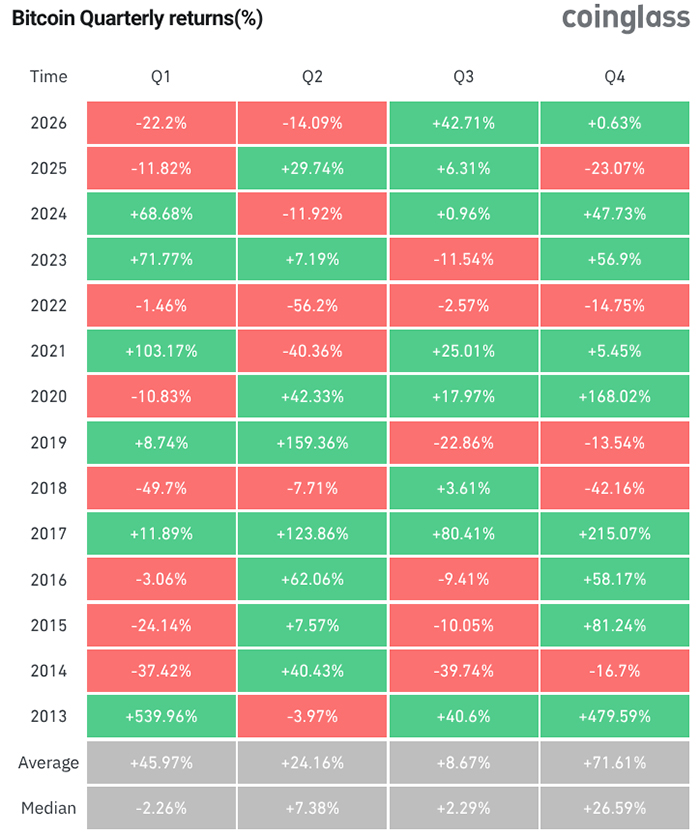
At the start of the fourth quarter, historically bitcoin’s strongest, its price stood at around $83550, after it gained 42.7% in the third quarter, according to CoinGlass data — the best third-quarter result since 2017.
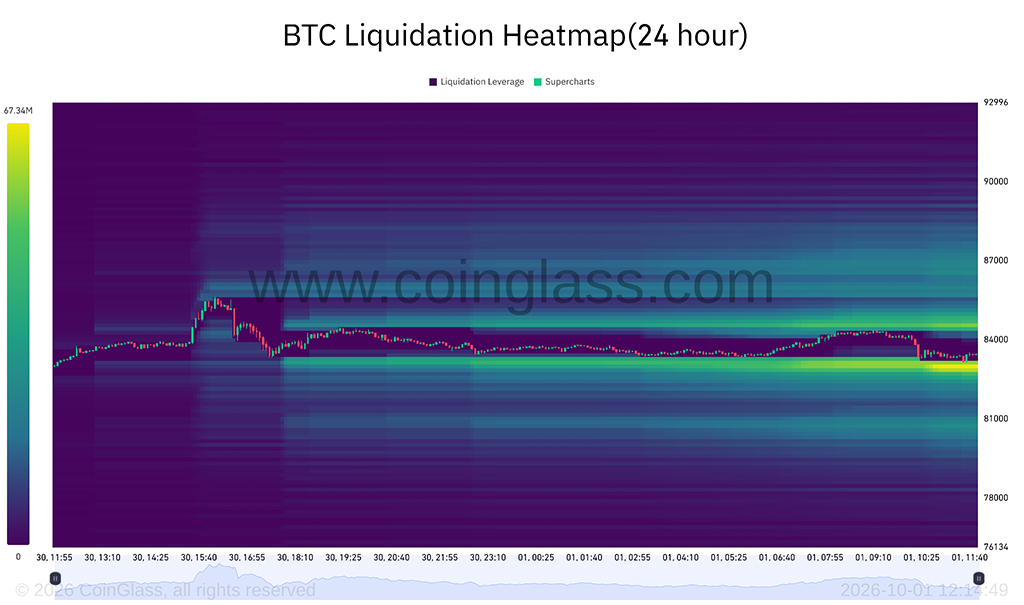
CoinGlass’s liquidation heatmap showed potential pockets of liquidity above and below bitcoin’s market price.
On Thursday, near the $83000 mark, close to the key support level at $82500, a new cluster of estimated potential liquidation pressure totaling $60 million formed — a level that analysts consider crucial for bitcoin’s broader recovery from its June lows.
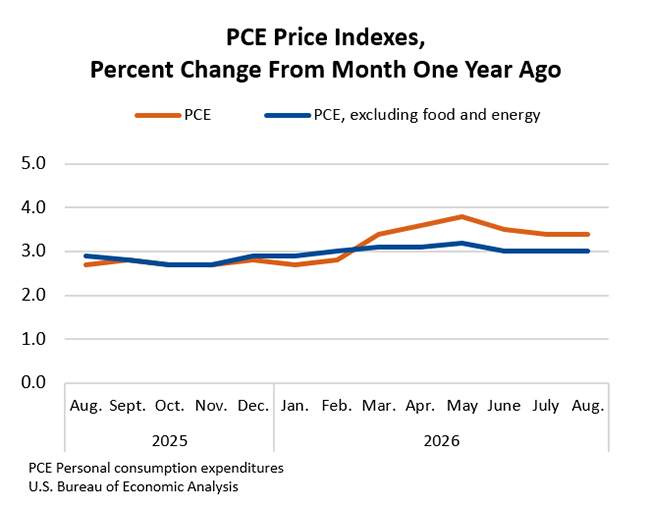
Bitcoin’s latest surge on Wednesday stalled, and the BTC/USD rate reversed at $85600. The rally followed lower-than-expected U.S. inflation readings. The Personal Consumption Expenditures index (PCE), the Federal Reserve’s preferred inflation gauge, came in at 3.4% year over year in August, against expectations of 3.7%.
“Excluding food and energy, the PCE price index increased 3.0 percent from a year ago,” the Bureau of Economic Analysis (BEA) said in its official release, referring to the core PCE index.
The release also included methodology changes affecting portfolio management and investment advice, computer software and accessories, and legal services.
“By our estimates, this methodology alone could reduce core PCE inflation by 20 basis points,” wrote market commentary outlet The Kobeissi Letter on X, noting that July’s headline and core PCE inflation was also revised down by 30 basis points.
Kobeissi predicted that markets would “significantly price in” the August data. On Wednesday, the S&P 500 closed down 0.25% at 7651 points, while the Dow Jones Industrial Average fell 0.86%.
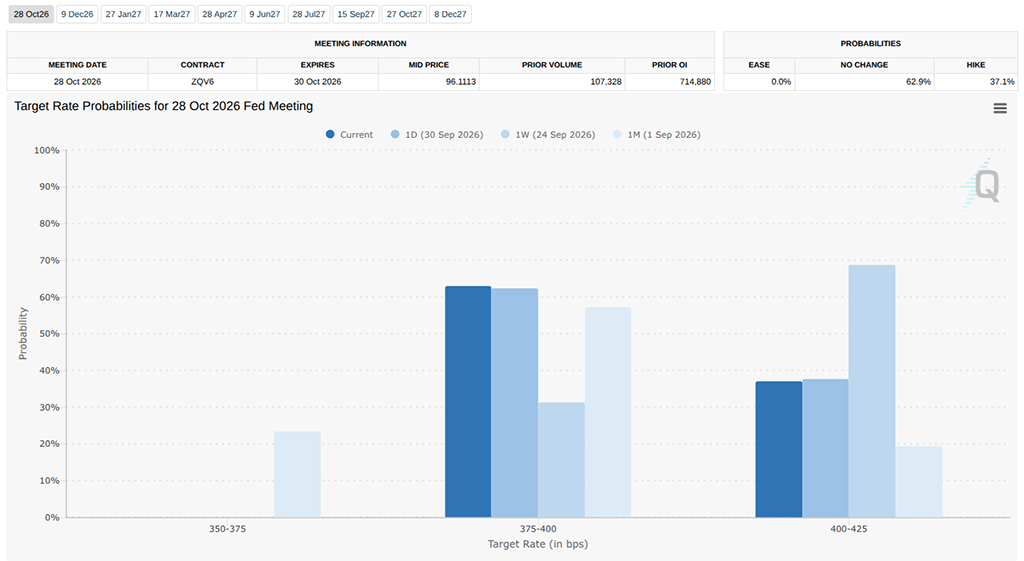
Data from the CME FedWatch Tool showed that on Wednesday markets priced the probability of a quarter-point rate hike at the Fed’s October meeting at roughly 37%, virtually unchanged on the day. Unlike last week, markets leaned toward keeping the federal funds target range unchanged at 3.75%–4%.
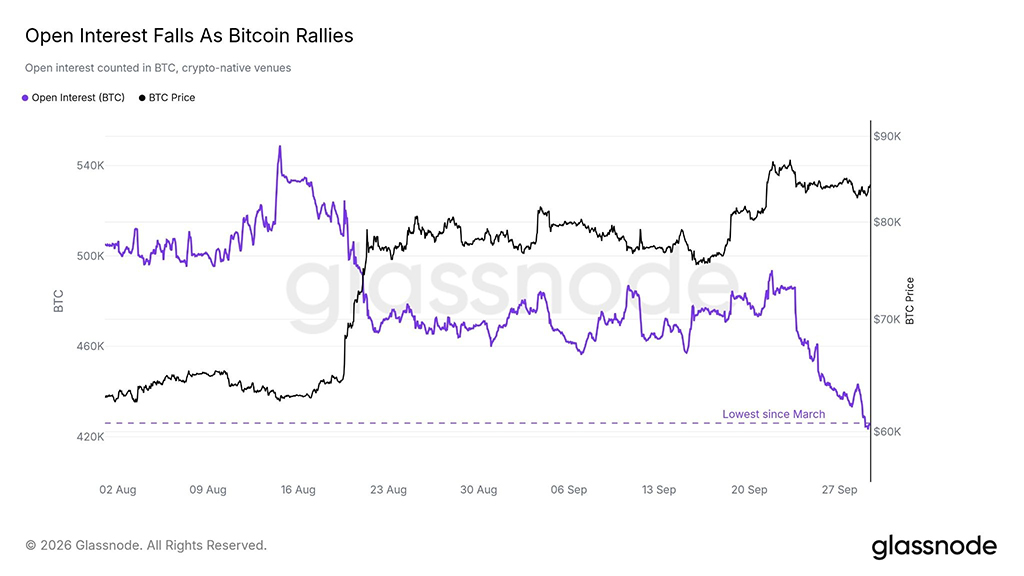
Despite bitcoin’s rise, open interest has fallen to its lowest level since March
According to data from analytics platform Glassnode, the decline in futures open interest could make bitcoin’s rise less vulnerable to forced liquidations.
Glassnode identified a divergence between bitcoin’s price and open interest (OI) expressed in BTC, which measures outstanding futures positions in bitcoin.
“Price is up 35% from the August lows, while crypto open interest is down almost 20%,” the post on X said. “This means open interest is at its lowest level since March, potentially making the rally less susceptible to the influence of excessive leverage.”
Sell orders around $85000 and a concentration of long-term holders in the $84000–$85000 range could strengthen resistance above the current price.
Read also: