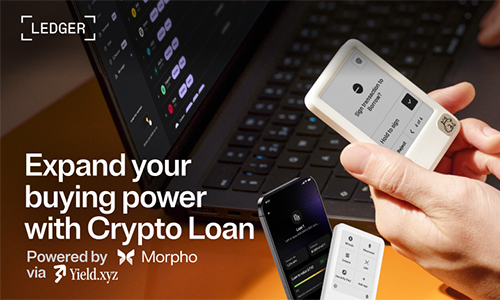
Ledger has introduced a borrowing-against-BTC feature in its wallet app via Morpho, allowing eligible users to pledge cbBTC or wBTC as collateral to receive loans in USDC or USDT.
In a press release dated 7 October, Ledger announced that the crypto loan feature will begin rolling out gradually to eligible Ledger Wallet users following its presentation at the TOKEN2049 conference in Singapore. The company described the feature as a way to borrow stablecoins against bitcoin-linked assets without selling them or providing collateral to a centralized lending platform.
As part of the same announcement, Ledger and Morpho provided direct access to Morpho for Ledger hardware users, and the wallet manufacturer also unveiled a limited-edition device series dedicated to the San Antonio Spurs. Ledger said that borrowing availability will depend on the user's country and that access will expand gradually.
Ledger uses cbBTC and wBTC as loan collateral
Under an agreement developed by Ledger, borrowers can pledge Coinbase Wrapped Bitcoin (cbBTC) and Wrapped Bitcoin (wBTC) to receive USDC or USDT. Morpho provides the decentralized lending infrastructure, while Yield.xyz manages the loan flow and tracks positions within the Ledger wallet.
According to Ledger, users can take out a loan in the app, check the loan-to-collateral ratio, add collateral, and repay the debt. The company also listed increasing the loan amount and withdrawing the corresponding collateral among the actions available through the interface.
According to the press release, before taking out a loan, eligible users can run a simulation to explore the options available to them. Ledger said that key transactions will use the Clear Signing feature and require physical confirmation on the Ledger hardware device before execution.
In the loan terms, Ledger points to variable interest rates determined by utilization levels on the underlying isolated lending markets. The company also discloses the presence of liquidation risks and positions itself as a technology provider rather than a financial advisor.
Ledger described the system as self-custodial, where private keys are stored offline on the hardware device and transaction confirmation remains with the user. The description distinguishes between the wallet interface, which is responsible for accessing and managing loans, and the signer who authorizes actions.
Read also: